


Spray-Applied Waterproofing Membranes in Tunnels

A spray-applied waterproofing membrane is a polymer layer sprayed between 2 structural layers fully bonded to both. In a tunnel it sits between the primary sprayed (or smoothing) lining and the secondary lining, and the 3 act together as a composite. We applied the spray-on membrane through the Coffs Harbour bypass tunnels, along with the smoothing layer it sits on, and the same system is on most of the recent motorway tunnels in Sydney.
Bonded Membrane Against Sheet Membrane
A sheet membrane is a separation layer. Water that gets past it can travel along in front of it it until it finds a way through, which can be well away from where it entered. A bonded membrane changes that. Because the membrane is bonded to the primary lining on one face and to the secondary lining on the other, a leak stays where it started and can be found and injected.
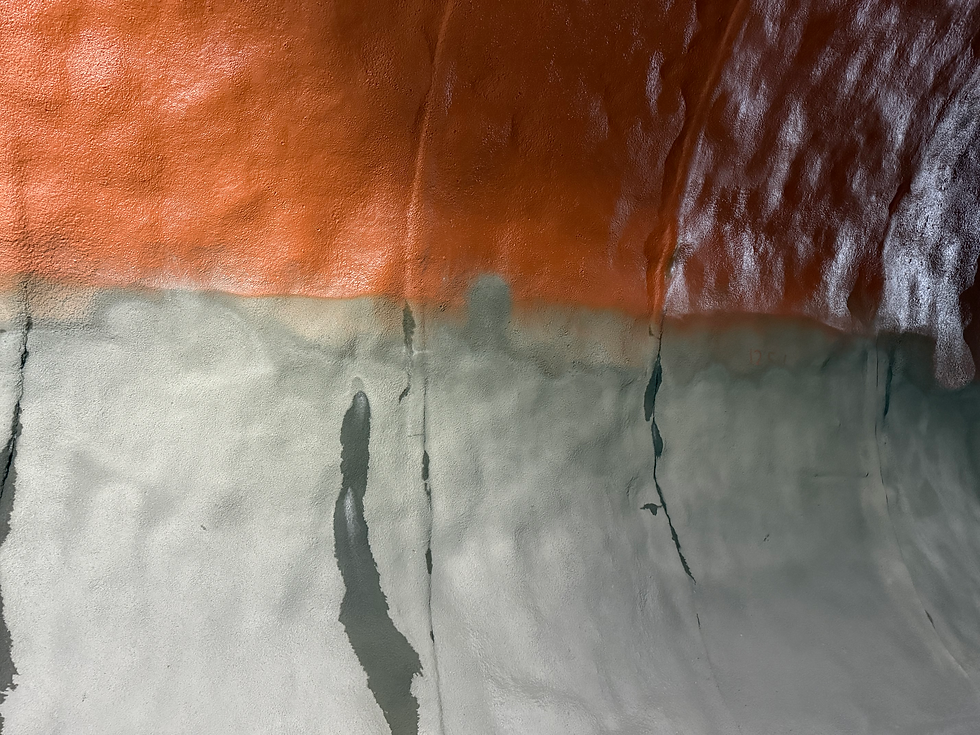
The composite only works if the membrane is bonded on both faces. That is why the surface preparation, the application are critical and each have their own checks. It is important the secondary lining goes on soon after the membrane has cured, before water pressure can build up behind it.
Where It Is Used
The system suits irregular geometry that a sheet cannot follow: sprayed tunnel linings, cross passages, shafts, headwalls and the junctions between them. It is also used on basement and pile wall substrates under a shotcrete overlay, and as a gas barrier where the design calls for one. A tunnel with a sheet membrane in the lower half and a sprayed membrane overhead is common, with a detail joining the 2.
The membrane is not a sealant for movement joints or structural joints, and it is not designed to be left exposed or walked on. Where the designer expects larger movement, at the interface between a piled box and a sprayed lining for instance, the design adds thickness, a fleece reinforcement, injection tubes or hydrophilic strips.
What the Design Asks For
The specification sets the requirements, and the systems in use on Australian tunnels are specified along these lines. A total dry film thickness of at least 3 mm and not more than 5 mm, checked at a minimum of 10 points per 100 m². Bond to the substrate and bond to the overlay of at least 0.5 MPa by pull-off, with the products in use giving above 1 MPa. Zero water penetration at 3 bar for 24 hours. Elongation of several hundred per cent and crack bridging across cracks that open in either lining. A design life matched to the structure, typically 120 years.
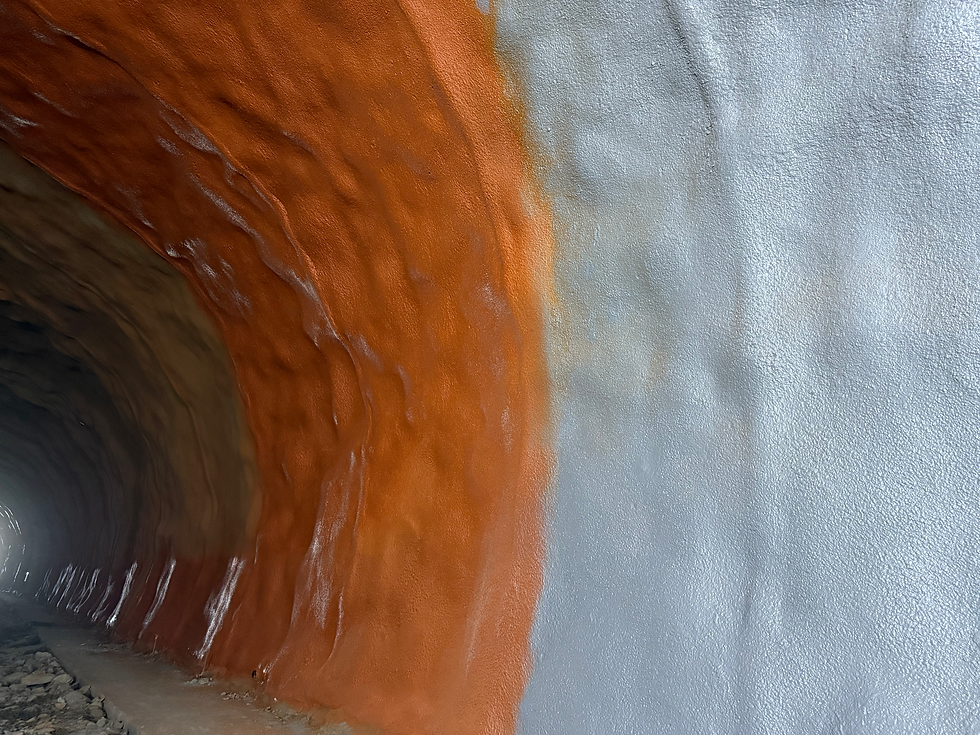
The membrane is water based. It arrives as a thick liquid, is mixed mechanically for a few minutes, and is sprayed through an airless unit in 2 coats, with the first coat in a contrasting colour so coverage can be checked by eye. Consumption runs about 1.5 L/m² for each millimetre of thickness, so a 3 mm system is about 6 kg/m² on a regulated surface and more on a rough one.
The Sequence
The work runs in a fixed order. Water ingress is controlled first. The surface is regulated, repaired and cleaned. The membrane goes on in 2 coats with the checks between them. The membrane cures, and its coverage, thickness and bond are recorded and signed off. Then the secondary lining goes on, from the bottom up, without piercing the membrane. Each of those steps will have its own post in this series.
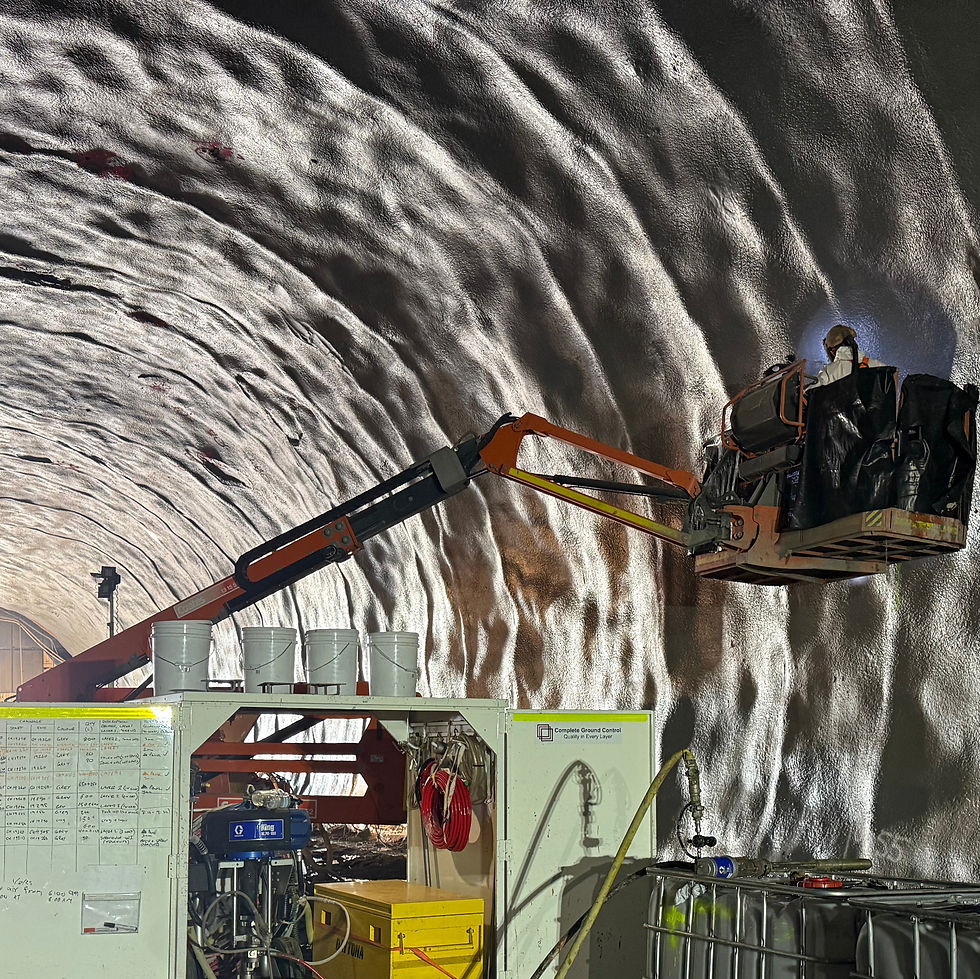
Before pricing or programming a membrane, the surface profile of the primary lining is the figure to set. The rougher the surface, the more membrane it takes, the longer it takes to cure in the hollows, and the more likely a shadow or a holiday in the coating.
We apply spray-applied membranes and the smoothing layers under them on tunnel and basement work. For a membrane scope or a question on one, contact us.
Comments