


What the Examiner Checks on site

The practical assessment is done on site with the examiner present. It covers the whole cycle, from the pre-start to the washout, and it includes how the operator recognises and responds to a problem. The assessment covers all aspects of the process including trouble shooting.
Before Application
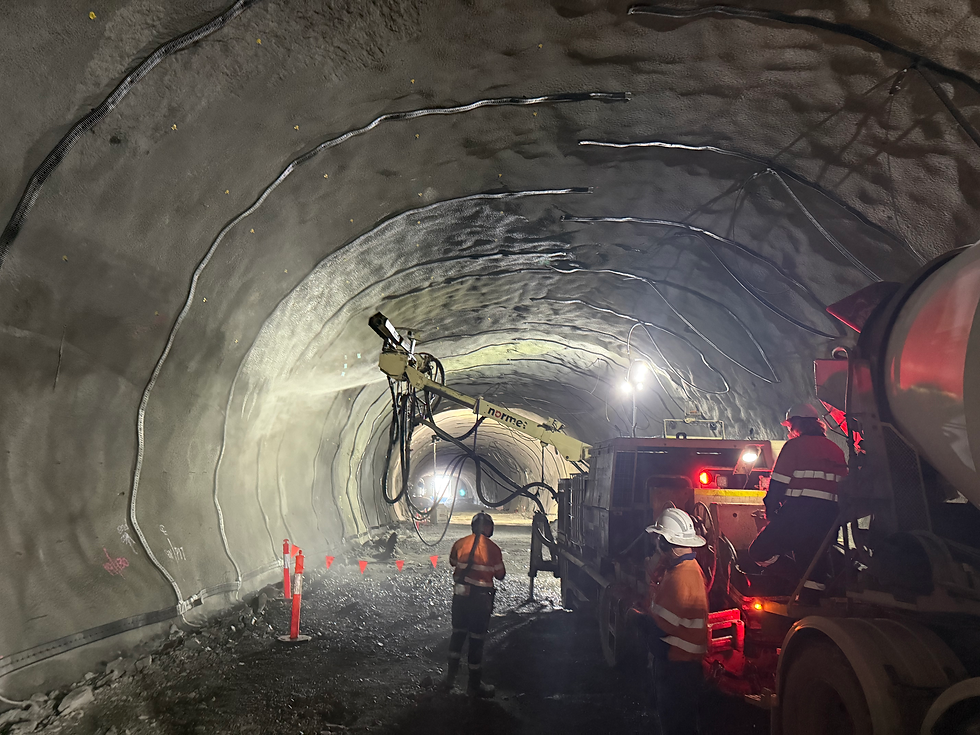
The pre-start, done properly and the sheet completed before the operator signs it. Start-up, including the interlocks and the gauge checks. On the rig, tramming and parking with the boom in its cradle, then setting up at the face, site JSA, SLAM or take 5, the substrate washed top down and left damp, the air supply checked and the operator standing at the front of the machine, under supported ground, outside the boom range, with a clear view of the spraying area.
On a hand spray assessment, pre-start checks for concrete pump, the line walked end to end with the pump operator, whip checks and or safety pins on every coupling on the concrete, air and accelerator lines, the compressor volume and pressure capacity checked (inc. pre-start checks), and the hand signals agreed out loud with both people demonstrating them.
The Start-Up Sequence
Priming, and the first material onto a discard area away from the finished surface. Air on before accelerator, confirm accelerator with back pressure of concrete in nozzle. The exclusion zone set and well marked. The nozzle pointed at the floor and away from people whenever the air, accelerator and/or concrete is pumping. On a robotic rig, the boom folded and unfolded only when stabilisers are deployed.
The Spraying
Distance of 1 to 2 m from a roboric rig and 1.0 to 1.5 m by hand. Angle at 90 degrees to the substrate, angle opened only to work material in behind steel and brought straight back. A small continuous circular pattern moved steadily, with the overbreak, deep holes and corners filled first, then horizontal bands from the lowest point up so rebound is not sprayed in. Pass thickness within what the mix can hold, built up over multiple passes, and the thickness confirmed with depth pins or scanner before the crew leaves.
The examiner also watches the operator read the material. Sagging and fallout can mean the pass is too thick or the load is under-dosed for what is being asked of it or poor substrate cleaning. A lumpy or deep craters on the surface with a sheen means under-dosing. Very high dry rebound that will not knit means over-dosing. The correct response and adjustments to each must be demonstrated and understood.
A rising pressure, a blockage, or material behaving wrongly. The response the examiner is looking for is to stop, relieve the pressure by reversing, and never push through a blockage or raise the engine revs to force it. Then shutdown in the right order: accelerator, air and pump off, then depressurise the system by placing the pump in reverse and dumping the air system - check for dead. Clear the blockage and resume application safely.

Where the pathway includes test panels, the operator sprays 600 x 600 mm panels at the production dose, in the orientation of the work, filled to full depth without overflowing the mould, marked before they leave the heading and left 18 hours before they are moved. The cores are cut 7 days later and the results form part of the assessment.
The examiner records what was assessed item by item and what was demonstrated, makes the recommendation and provides EFNARC with the evidence. EFNARC issues the certificate.
Treat the assessment day as a normal production shift.
We run EFNARC nozzle operator courses for Robotic and Hand Spraying, on your site or at other locations by arrangement. The course pages have the modules and the enquiry form.


Comments